In this chapter I will digress a little from the Elephant House to narrate the story of the Sanderson plantation’s growth and diversification, focusing on improvements in farming techniques, infrastructure and crop variety. From the introduction of citrus fruits to expanding banana production and even experimenting with jojoba and avocado. The enterprise evolved significantly until its sale in 2005.
By the 1970s, with three families firmly settled on the property, a period of investment and expansion of the Sanderson enterprise was realised. With Stan, Laurie and Alan working together, there was opportunity to make further improvements and increase the productivity and quality of the produce. This required longer term planning, trialing different irrigation methods, investing in water tanks, electrification of the river pump and clearing and preparing more plots of land. This also resulted in the formation of a partnership and the plantation commenced trading as Sanderson & Sons.
In the early 1970s, Stan had diversified into citrus fruits, with several acres of oranges, grapefruit and tangerines. The impressive orchard lined the long driveway to the packing shed. This crop was seasonal and only labour intensive during the harvest which complemented the year round banana season. A grading machine was installed in the packing shed. The washed oranges and grapefruit would roll along a conveyer belt until they fell into the bin according to its size. As a young child I can recall polishing the fruit before they were packed into waxed cardboard cartons.
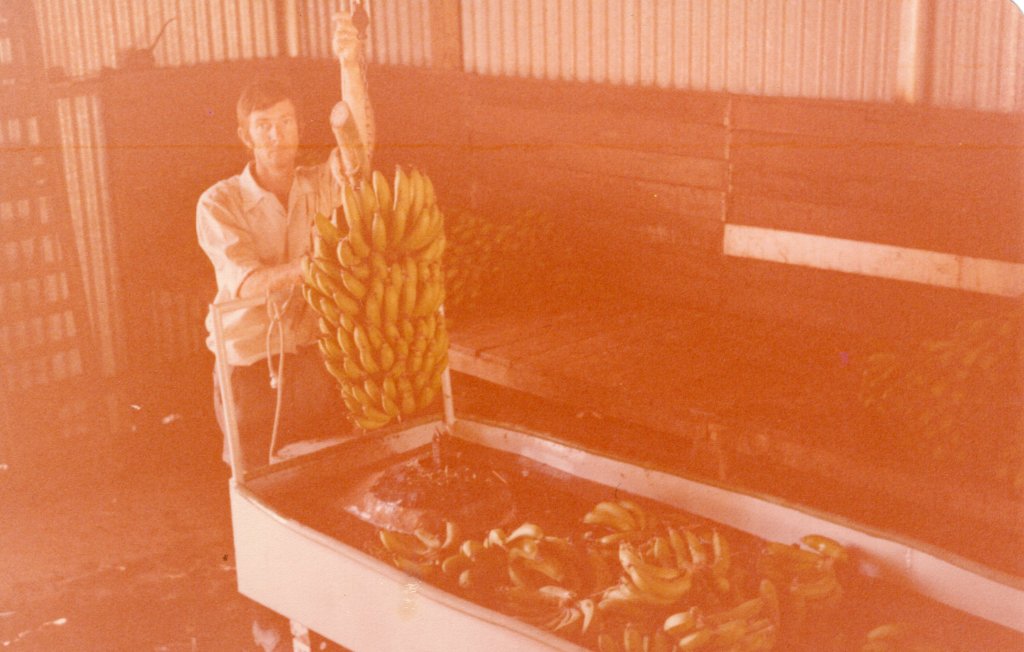
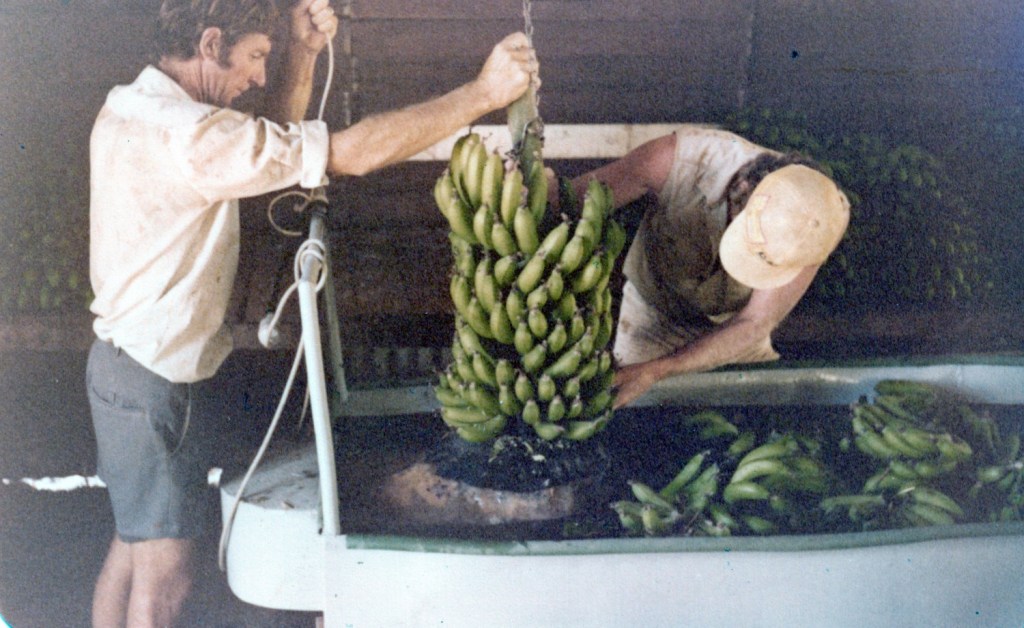
Plantation records show that in 1979 there was significant investment. In an effort to drought proof the cropping program and support an increase in production, a large 100,000 gallon tank was installed near the packing shed. This was one of the first major infrastructure investments for many years. They also designed and built a banana de-hander. This was installed in August 1979 in time for the peak harvest period over the summer months.
While Laurie and Alan continued to plant more bananas, Stan looked to trialing different tropical fruits. This included a patch of avocado trees near the main house. He and a couple of other growers were keen to see if avocado was suitable for commercial production. This small and new crop was in addition to a further one and half acres of bananas planted in November of the same year.
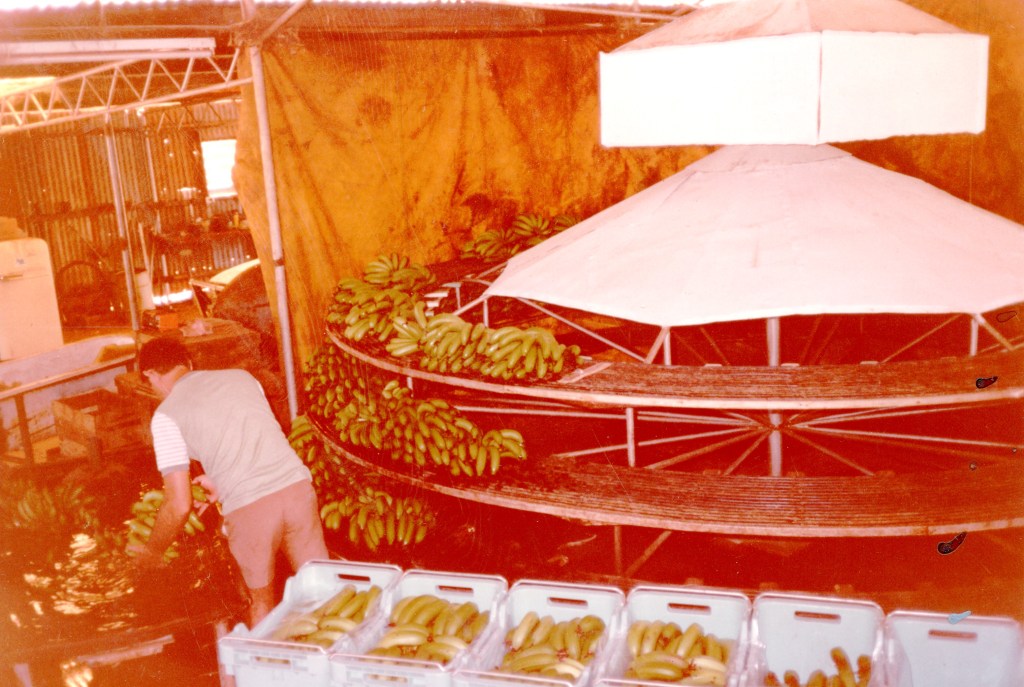
The following year in 1980, they continued to expand production and improve efficiency. The packing shed improvements included two water troughs to wash the bananas hands. These were completed in July and October respectively and a revolving packing bench completed in September. A further acre of bananas were planted, more avocados and a second acre of bananas on the northern side of property.
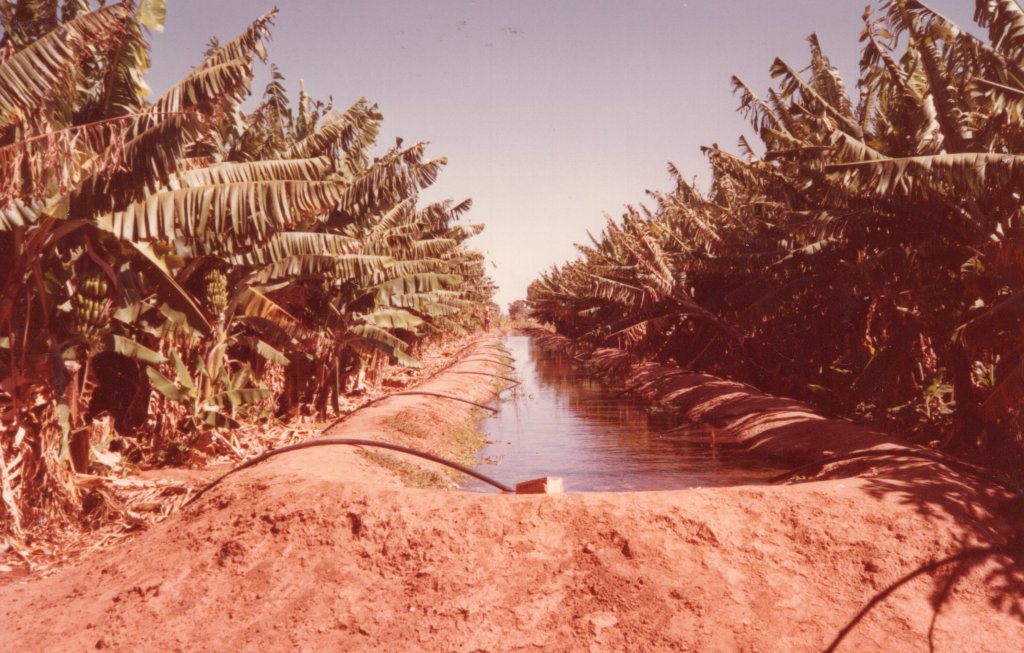
Continuing the diversification initiatives they trialed a new approach to irrigate the bananas furthest from the water source by irrigating with dams and syphons. Three dams were built on the northern end, furthest away from the river. While the cost of pumping water was reduced, the evaporation of water from the dams negated any benefit. They continued with flooding method until plantations started to adopt the sprinkler system.
With the increased banana production they invested in an old Bedford truck (a retired Boans Department store delivery truck) to deliver the produce to the Carnarvon Transport depot in town. By now the plantation had twelve acres of bananas producing quality bunches all year round.
In 1981 disease severely affected the citrus orchard. All of the trees had to be destroyed. They were removed and burned in April of that year. This was a significant blow to the Sanderson enterprise however it gave way for Laurie and Alan to further expand the banana program.
The Sanderson brothers understood the commercial benefits of producing high quality fruit and the need to care for fruit across the supply chain from paddock to market. To help cool the fruit down as soon as possible after harvest, they installed an overhead cooling unit above the rotating bench. Once the bananas were de-handed and washed they were sorted into sizes according the industry standards of small, medium, large, extra-large and allowed to cool down before packing. These innovations were always designed and engineered by the brothers, working together to utilise their skills, resources and whatever materials they had on hand.
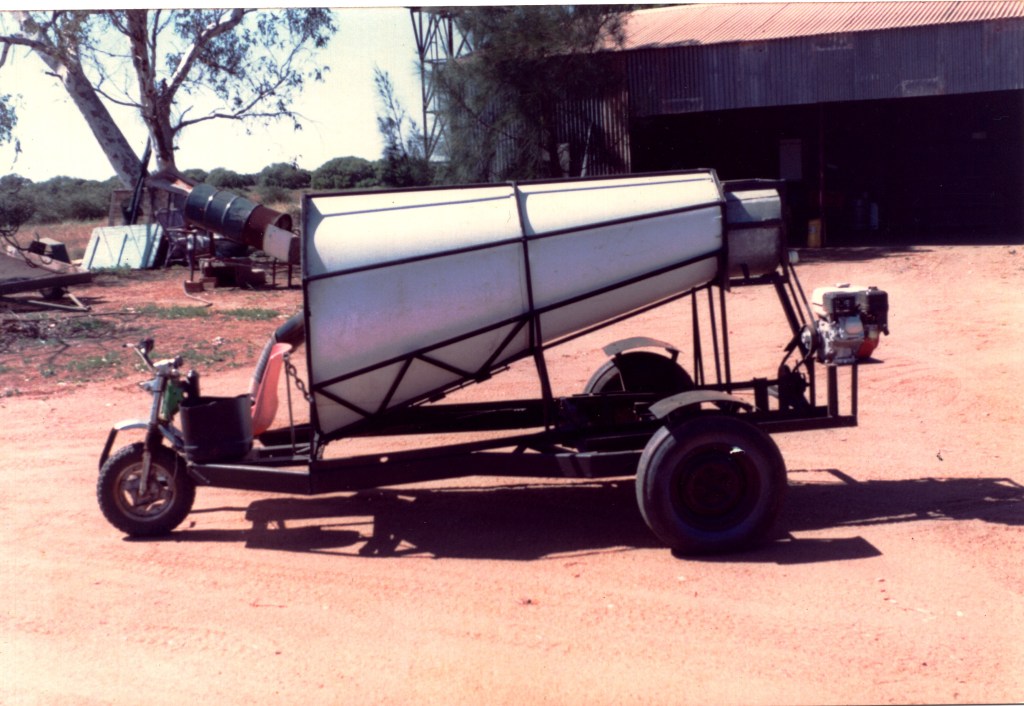
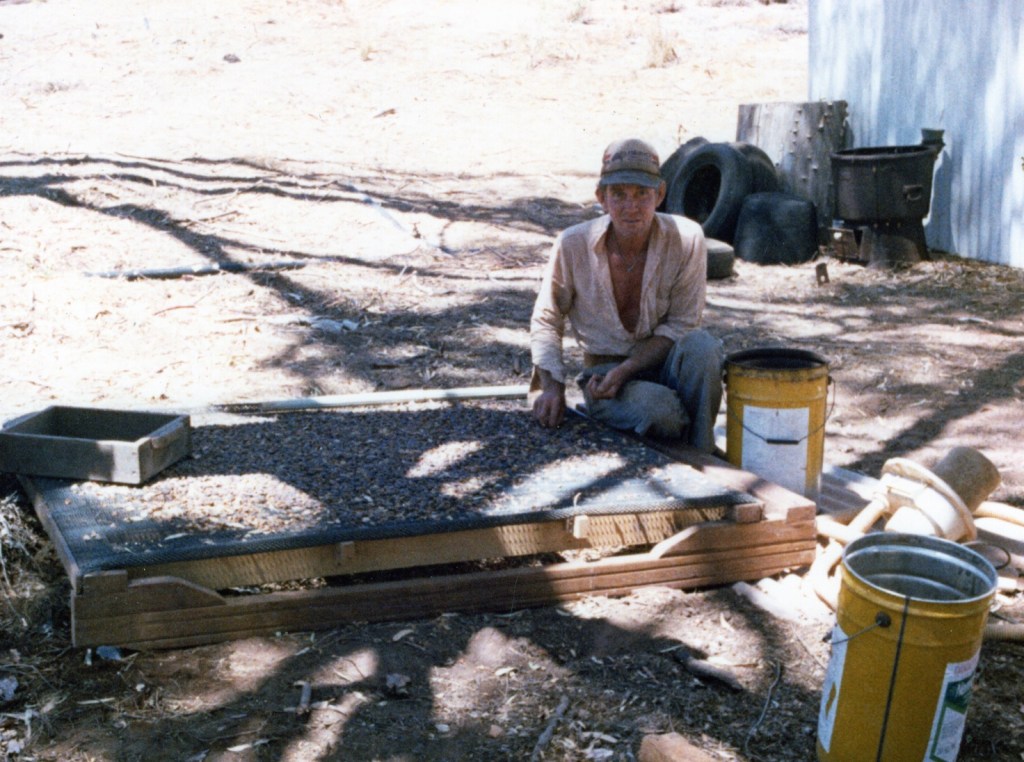
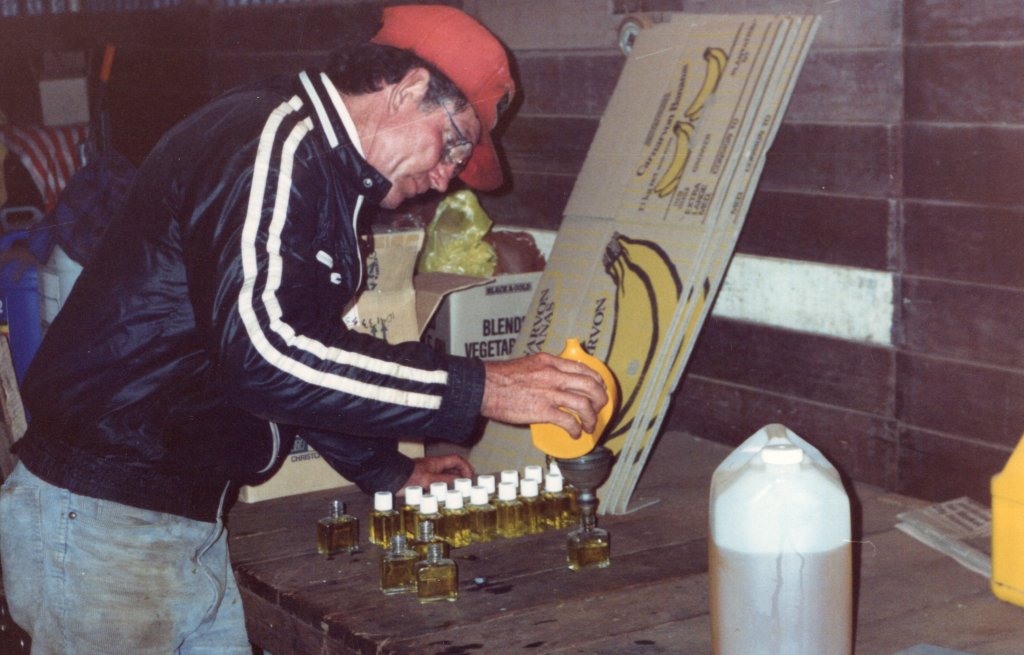
Keen to try something new, in 1986 Laurie and Alan set about trialing jojoba, a drought resistant crop with increasing global demand for jojoba oil. The oil, with its health benefits and high heat tolerance, was in demand for use in cosmetic and health products. The brothers researched the crop for a couple of years before planting the first plot. They then set about designing and building the equipment to harvest the nut and process a cold pressed oil. The jojoba program was a complimentary crop to the harvest schedule of bananas and the winter crops of cucurbit and melons. The hard nut could be harvested when time permitted, cleaned and then stored and processed as orders were received.
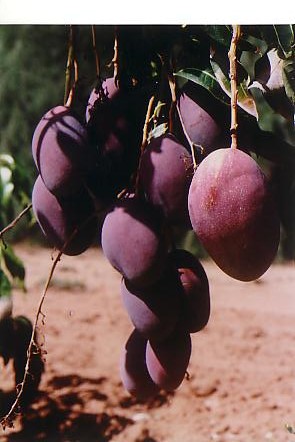
In 1989 they turned to mangoes, partly to diversify but also to flood proof the property. Tree crops were more resilient to cyclones and flooding and helped stabilise the top soil. Transitioning to tree crops was also a move away from the physically demanding banana harvest. Mangoes had become a popular fruit and in demand by consumers. Laurie and Alan planted more than 2000 trees over a five year period and grafted eight different varieties resulting in a harvest program from December to April.
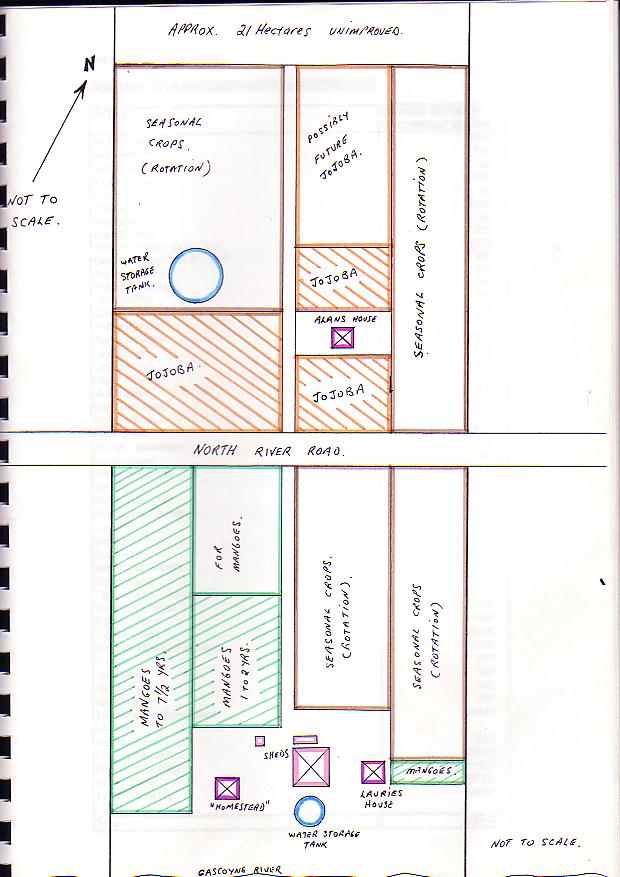


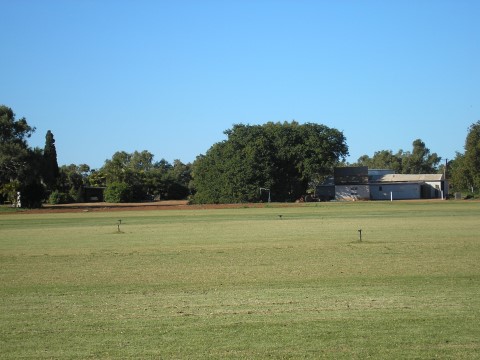
In 1998 they turned their efforts to turf farming in response to the residential and marina developments in Exmouth. Marketed as Sanderson Turf Farm, the venture resulted in one and a half acres of turf being cultivated. They grew the drought tolerant varieties of Greenly Parks and Short Leaf Buffalo. The turf can be found in Carnarvon at the Northwater public space, in Gascoyne Junction, Coral Bay and Exmouth.

The Sanderson family worked the property for almost 70 years spanning three generations. They made a significant contribution to the community and industry. Stan was instrumental in the establishment of road transport, moving away from transporting fruit by state ships. Laurie and Alan demonstrated that through diversification and innovation many opportunities exist for the plantations on the Gascoyne River. Sanderson & Sons traded until 2005 when they sold the property to new owners who, ironically, reverted to a banana program with new integrated irrigation methods.
The next chapter I will delve further back in time to the 1920’s as I trace the origin of the Elephant House through Dr Fergusson-Stewart the Resident Medical Officer and public health advisor for the Shire of Carnarvon.
 The Elephant House