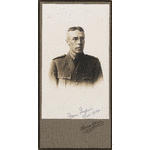
To understand how the Elephant House came to be on the plantation we need to explore the origin of lot 147 North River Road. This brings us to Dr Edmund Fergusson-Stewart, a veteran of World War I and the Resident Medical Officer for Carnarvon in the late 1920s.
The birth of the Carnarvon horticultural industry
In the early 1920s there was growing interest in the opportunity to make greater use of the large reservoir of artesian water stored beneath the sandy Gascoyne River and to cultivate the alluvial soils stretching away from the river’s bank. The artesian water source had been found to be plentiful; coupled with the sub-tropical climate and the alluvial soils, the region provided ideal growing conditions for a wide range of vegetables and fruits. By the late 1920s Carnarvon landholders and businessmen were sprouting the merits of the fledgling horticultural industry. Politicians wanted to expand the economy, which until this time, was reliant on the pastoral industry.
The pastoral industry had suffered the impact of a long and debilitating drought. Sheep numbers were decimated. In addition, following the Great War, global demand for wool significantly declined and Western Australia was in the midst of the Great Depression. It became imperative for governments to look at expanding the economic base. There was increasing demand for fresh fruit and vegetables for the growing population in Perth and to create employment for the hundreds of young men returning from war. Developing the horticultural industry provided the opportunity to meet these needs. In an effort to support government investment, the Minister for the North West campaigned for and promoted the Carnarvon horticultural industry. An example of this can be found in a Daily Mail report of 1925, when the Minister had a magnificent display of Carnarvon tomatoes in his Perth office.
At this time there were about ten plantations growing bananas, tomatoes, beans and trialling range of other vegetables and fruits. As crops were harvested they were sent to Perth, transported by sea on the state ships. These early shipments did not arrive in very good condition. Knocked about in the timber cases and subjected to the hot humid conditions experienced in the ship’s storage hold. The early growers persevered. Then 1932, the first marketable shipment of bananas arrived in Perth onboard the State Ship Centaur.
Dr Edmund Fergusson-Stewart
Dr Edmund Fergusson-Stewart had served in the Great War as a Captain in the Australian Armed Medical Corp from 1914 to 1916. His tour of duty was initially hampered with illness when he contracted typhoid while on route to Egypt. He subsequently spent several months in hospital in England. When he was declared fit for service Fergusson-Stewart went on to serve in Egypt, the Suez, in France at Marseilles and in Belgium. He returned to Australia and was discharged from duty in 1917.
Following the end of the war he was granted an allocation of land through the Soldiers Settlement Scheme. At this time the north side of the Gascoyne river was still mostly unallocated Crown Land. The early development of the agricultural blocks was encouraged through the Soldiers Settlement Scheme and subsequently Dr Fergusson-Stewart was allocated Lots 146 and 147 for his service to King and Country.
Dr Fergusson- Stewart decided to continue practicing medicine in the town of Carnarvon and purchased the town’s medical practice. He was appointed as the resident medical officer and also advised the Town Council on matters pertaining to public health.
The doctor arrived in Carnarvon in November 1929. That same year Carnarvon experienced the largest river flow in 30 years providing the newfound farmer an unfortunate introduction to plantation life. Cut off from the town, he had to acquire a boat so he could cross the swollen river to attend to patients. To add to this, the doctor’s wife and son followed soon after. They arrived on Christmas Day, disembarking the State Ship Gascoyne at the One Mile Jetty.
The Fergusson-Stewart family was actively involved in the community life. The doctor was a member and chairman of the Carnarvon Banana Growers Association and the Returned Services League (RSL.) His wife Enid, the daughter of Grace Drake-Brockman, helped establish the Carnarvon chapter of the Girl Guides. They had three sons, Edmund, Athole, and Vernon. The eldest son Edmund, was not cut out for military service, nor academically minded. He lived in Carnarvon and worked on the plantation while the other sons pursued medicine and military careers.
The early development of Inverstewart Plantation
Dr Fergusson-Stewart and his son Edmund Jnr started the clearing and levelling of a small area of land closest to the river. They built a house on Lot 147 and named the property Inverstewart Plantation. They also built a simple packing shed and an engine shed to house the diesel water pump that was connected to the well deep in the river bed. Edmund Jnr directed most of the plantation activity in the early years while his father attended to his medical practice, worked at the hospital and advised the Council on public health matters.
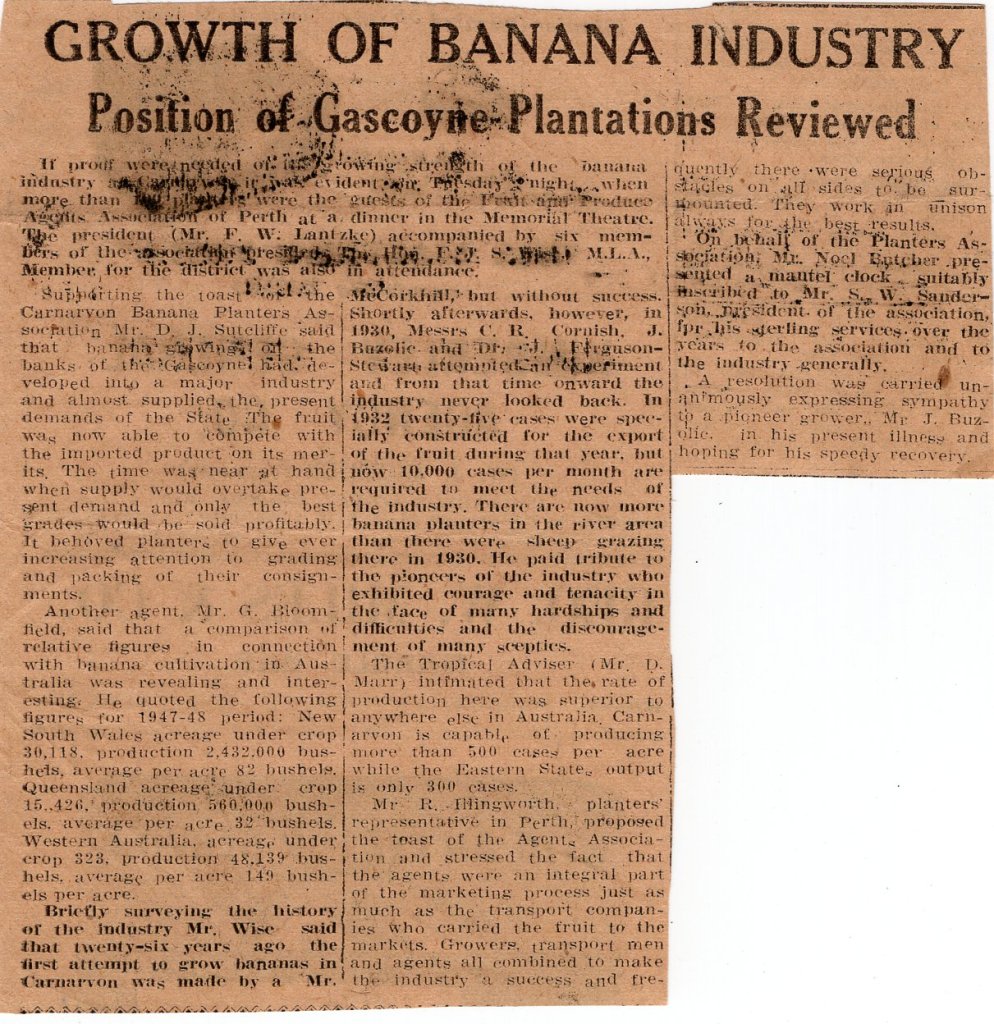
The state government was moving ahead with opening up the north west. A key piece of infrastructure was the construction of a bridge across the Gascoyne River. The new bridge opened in April 1932.
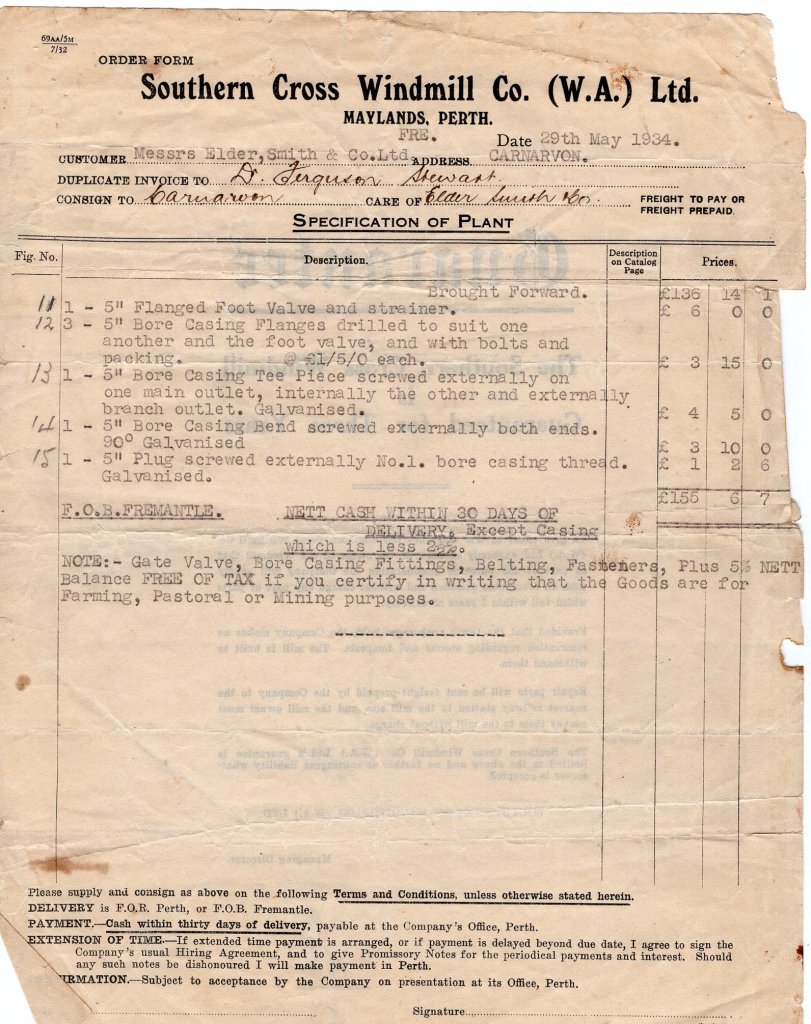
In 1934, the Fergusson-Stewarts installed a windmill behind the packing shed. In the first five years they had cleared about 10 acres of land and had in place the key infrastructure to support a small crop of vegetables and the first stands of bananas. Later, a second windmill was installed on the northern side of the property, near a creek, where they stocked a small flock of sheep. The sheep would be loaded onto a lorry and taken to Brickhouse Station for shearing.
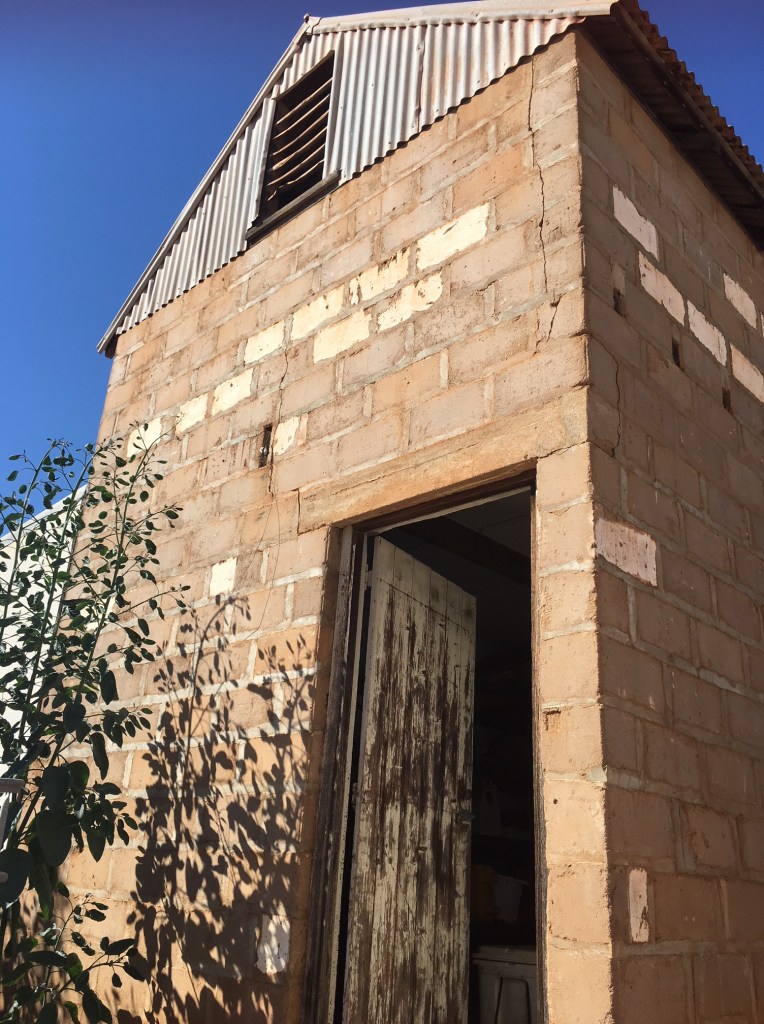
Around this time the doctor became aware of the intention of the government to sell off the infrastructure and materials from a failed meat works project which had been constructed on Babbage Island. This project had been sitting idle and vacant for several years and was to be sold off in an effort to recoup the significant losses. Dr Fergusson-Stewart put in a bid for one of the storage buildings, a solid building which could be dismantled and reconstructed on the plantation. It would provide accommodation for casual labour or a housekeeper, with ample storage space in the loft.
The doctor would have faced quite a challenge to transport the heavy load of locally made large bricks across the Gascoyne River. It was not only heavy but cumbersome with the timber roof joists and trusses, the solid jarrah timber beams for the second level and heavy locally made bricks. Reconstructing the building took several months. Once completed, the plantation was starting to resemble an orderly farming enterprise with a main house, a reasonable sized shed, staff and storage quarters and a good supply of water.
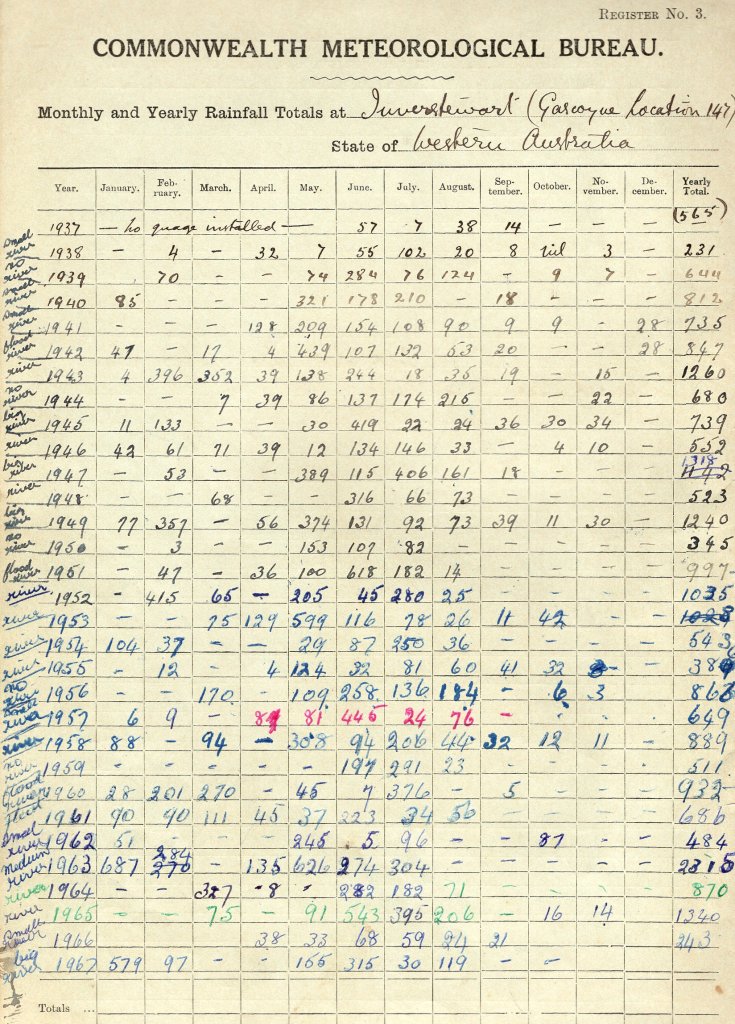
The Fergusson-Stewart’s kept meticulous records. Weather records and market reports for the early shipments of bananas describe the tough conditions for growing and transporting the fruit to Perth. Plantation records detail periods of low rainfall, river flows and heat waves. While the market reports describe the effects on the produce through shipping bananas in timber boxes throughout the summer months. Improvements to transporting the fruit to market was a priority for the success of the industry. Through trial and error the handling and packing of bananas improved over the time. By the mid 1930’s the Perth newspapers were describing the ‘magnificent’ bananas arriving in Perth from Carnarvon.

In 1936, Dr Fergusson-Stewart’s health started to fail. He stepped back from community responsibilities and retired from the Gascoyne Banana Growers Association. Edmund Jnr. took on the responsibility of the plantation. Following medical treatment in Perth, Dr Fergusson-Stewart returned to Carnarvon where his health further deteriorated. On the evening of 16 April 1937 he died at Carnarvon Hospital.
Dr Fergusson-Stewart was recognised for his interest and commitment to the public health of the town and also his ardent belief in the value and development of the agricultural industry in Carnarvon. Over a period of eight years he had cleared and cultivated the first 20 acres of the 100 acre property and built the basic infrastructure to support a small horticultural enterprise described as one if the finest producing properties on the river.
His son Edmund Fergusson-Stewart Jnr. continued to work the plantation and was recognised through the Horticultural and Art Society for the quality of his fruit. In 1940, his prize winning case of bananas was described as ‘almost faultless and far superior of any case of bananas in the Eastern States.’ Stan Sanderson worked with Edmund Jnr. from 1939 and subsequently purchased the plantation in 1942.
The Soldiers Settlement Scheme – Carnarvon
Dr Fergusson-Stewart was granted the Lots 146 and 147 though the Soldiers Settlement Scheme for his service in World War I. The Western Australian government had settled more than 5000 soldiers on farms, mostly in the Wheatbelt and South West, but in 1929 only 3500 remained actively engaged in farming. The scheme had varying levels of success and was eventually abandoned. However, in 1947, following World War II, a new scheme was established resulting in four more plantations in Carnarvon being allocated to returned servicemen Basil Dawson, George Negus, William Fennel and Charlie Coombs.
We now know the Elephant House, or at least the materials, originated from the ill fated Carnarvon Meatworks. I am still seeking to know why the Sanderson family called this building the Elephant House and so I continue my research. In the next chapter I will share the little known history of the Carnarvon Meatworks.

 The Elephant House