My grandfather Stan Sanderson had a younger brother named Arthur. Unfortunately I never met my Great Uncle Arthur. He died in a motor vehicle accident in 1966 so I was left with gleaning information from the few family members who had known Arthur or met him on just a few occasions. What I have learned is that Arthur was a happy go lucky man and as it often goes with siblings, Arthur possessed quite a different demeanour to his older brother Stan. The following is my interpretation of how this character played a key role in the naming of the Elephant House.
Arthur Sanderson
Arthur Sanderson was six years junior to Stan. Born in 1916 he was a happy go lucky child and later, as a young man, he was known to be a bit of a comic, always cracking jokes, skylarking or playing practical jokes on his older brother. His father would often scowl and chastise him, but this held little effect on Arthur who sailed through his early years in school, not taking anything too seriously. He loved music from an early age and when radio broadcasting commenced in Perth in 1920’s he would listen to the music played on the radio in the living room of their Guildford home. As a young man he was taken by the new sound of jazz music and would tune in and listen to the late-night radio programs. He enjoyed it so much that he learnt to play the saxophone and played at local bars in Guildford and Perth.
Arthur lived for the day and did not plan too much for the future. When he met a young Claire Ward there was no time to wait. They were married in 1938 when Arthur was just 22, the same year Stan and Marjory were married. Arthur and Clair lived in Guildford and two years later their only daughter Patricia was born.
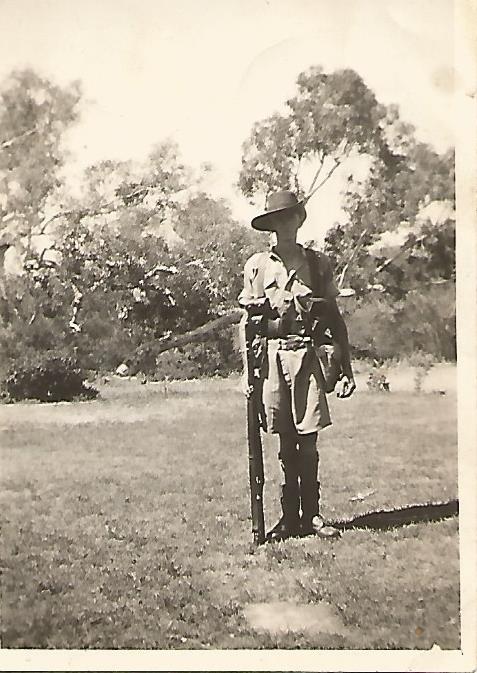
In 1939 when hostilities in Europe beckoned the start of the Second World War, Stan Sanderson enlisted in the Army Citizen Military Forces in Carnarvon. At the same time his younger brother Arthur enlisted into the army as a member of the Second Australian Imperial Force (2nd AIF), which provided volunteer personnel during World War II. The Second Australian Imperial Force was the volunteer expeditionary force of the Australian Army formed following the declaration of war on Nazi Germany. Arthur trained in Toodyay and remained a member of the AIF until 1948.
He liked to follow politics and found the antics of the political forum entertaining. He was interested in Stan’s involvement in the Country Party and his involvement in the horticultural industry the many representations to government seeking improvements to road transport, water distribution and funding for the fruit fly baiting scheme.
Arthur worked as a bus driver and earned a bit of extra money on the side as a barber. He provided a barber service to Guilford Grammar for the boys in the boarding school. Every Wednesday after arriving back in Guildford from a day’s work on the public transport Arthur would ride his bike to the boarding houses and earn a few quid as the school barber.
A visit to Inverstan Plantation and the Elephant House Joke
Arthur would travel to Carnarvon for an occasional holiday and would stay with Stan and Marjory on Inverstan Plantation. He was a city man, smart dresser and avid reader of newspapers. He also liked to have a drink or two. In contrast, Stan was a member of the Rechabites, an organisation that encouraged temperance and moderation, particularly in the drinking of alcohol.
Arthur and Marjory shared an interest in music and Marjory enjoyed the light hearted jokes and humour of Arthur. As a sister in-law they got along well together.
Sometime in the late 1940’s Arthur visited Stan and Marjory. He arrived with his wide smile and cheeky banter, joking with his young niece and nephews, ready with a bag of tricks and riddles. “Which part of your body can your right hand touch but your left hand can’t?” he would ask of his young nephews. The children would look thoughtful and scratch their head. “Your left elbow,” he would answer. Another riddle would be asked “What is as big as an elephant but weighs nothing ?” Knowing the answer to this riddle they would roll their eyes and answer in unison “Its shadow.”
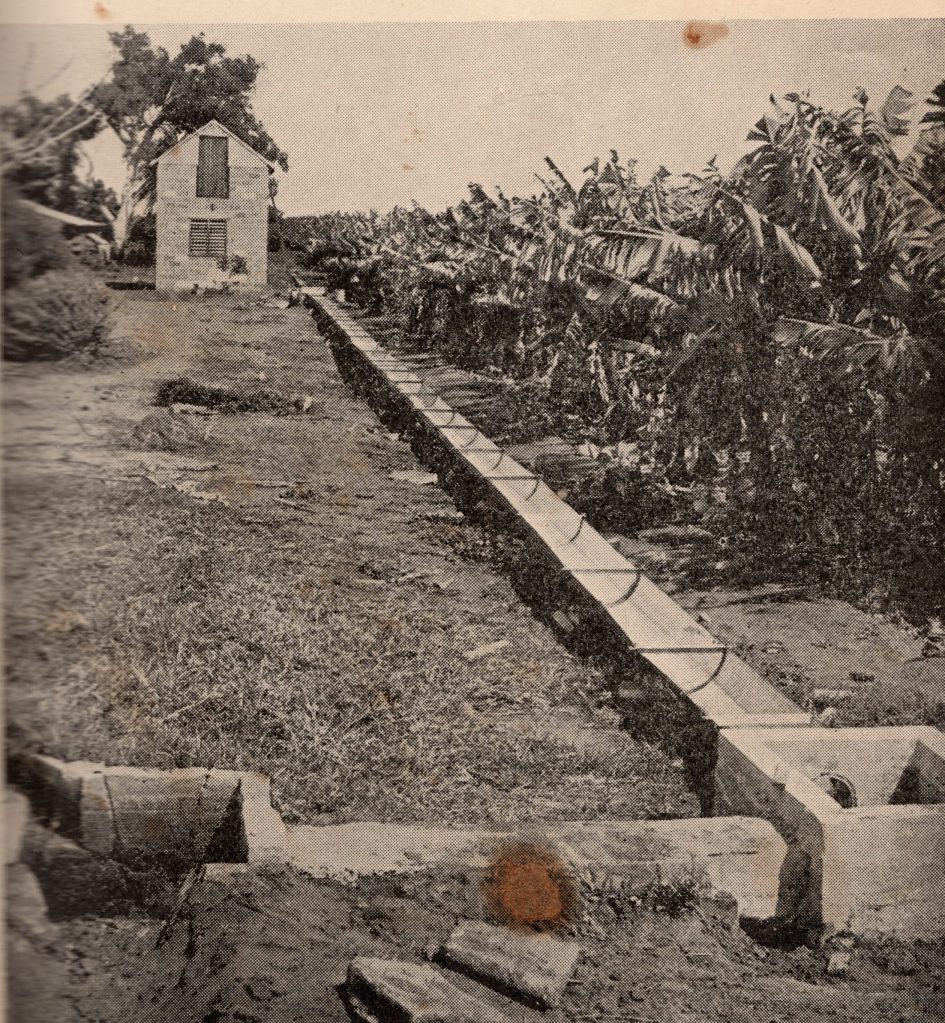
With Stan and Marjory’s expanding and delightful family, Arthur was accommodated in the room in the old building near the packing shed. After all, the three bedrooms of the main house were occupied by June, Laurie, Alan and Gordon. The two story brick building had a simple wire frame bed and a striped horse hair mattress. A pillow and blanket provided his comfort for a good night sleep.
One warm afternoon, Arthur found himself sitting on the verandah looking towards the banks of the river. A cooling afternoon breeze found its way through the lattice and rustled the newspaper sitting on the wicker cane table. It was three o’clock, the whistle of the kettle signalled it was time for afternoon tea and he could see Stan walking across from the packing shed. Laurie, Alan and Gordon followed.
Arthur picked up the copy of the local newspaper, the Northern Times, reading the headlines as he waited the arrival of his brother. A report jumped out to him announcing that the local government had finalised the debt owing for the rates on the failed Northwest Meatworks project. He recalled the reports years before in 1934 when the project was labeled the White Elephant of the North West. The article in the Northern Times ‘The Fate of Our White Elephant’ had announced the project had met its end by being ‘ignominiously scrapped.’ However it was years later before the debt was finally cleared. Arthur linked the North West Meatworks known as the White Elephant of the North West with the building constructed from the remnants of that failed enterprise.
That evening, after tea, he bid his brother and sister-in-law a good night and with a wink to the children said, “Well I’m off to bed. It is time I went to sleep in the Elephant House.” To which the children giggled and bid their Uncle Arthur goodnight.
Laurie remembers his Uncle Arthur coining this phrase but the connection and reason for this name was thought to be his way of making a joke and finding the lighthearted side of any situation. However his quick thinking and wit linked the origin of the building materials which were salvaged from the Carnarvon Meatworks with the newspaper articles he had read over the years. The comical name was a perfect fit and is still used to this today by the Sanderson when they recall life on Inverstan Plantation.

A Final Word
My quest to discover the origins of the building affectionally referred to as the Elephant House has taken me on quite a journey. It has revealed a great deal more of my own family’s history and unveiled the role that the war had in the birth of Carnarvon’s horticulture industry along the banks of the Gascoyne River. It has revealed a surprising link to the Gascoyne pastoral industry and the little known North West Meatwork project. If you date the Elephant House to its origins at the North West Meatwork, my research finds the building has served a purpose for 102 years.
This has been but one family’s story, shared through my curiosity to seek the answer to a question. What my inquiry and research has revealed is worthy of a greater story. The story that tells the greater history of Carnarvon’s horticulture industry. The stories of the founding fathers, the many families from Italy, Croatia and Portugal who have two or three generations of families still working and living on the plantations. And the more recent stories of the Vietnamese families who have established a new life on banks of the Gascoyne River. I wonder if there is appetite for these stories to be shared.
Thank you to those readers who have reached out and shared their comments, reflections and memories revived through reading the pages covering the various topics I have shared here.
Tami Maitre
 The Elephant House